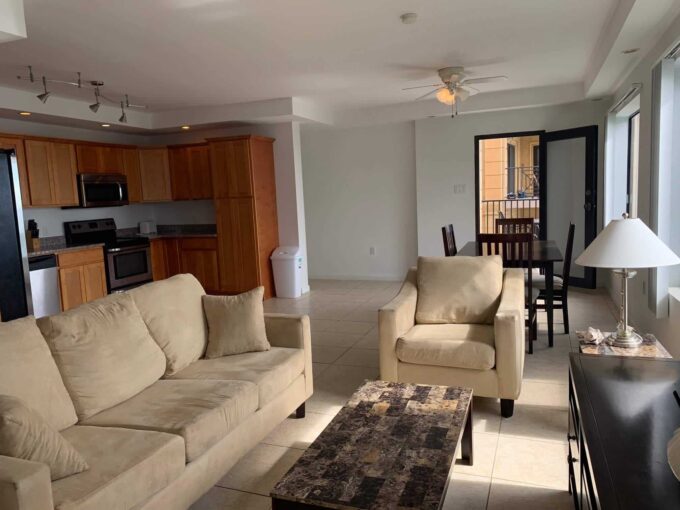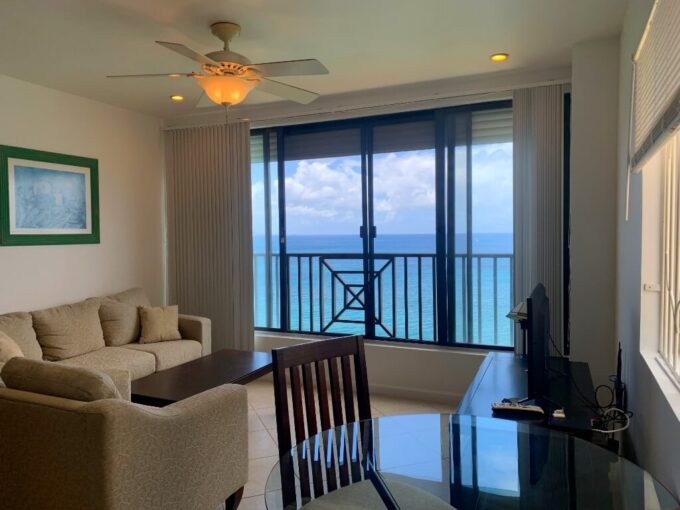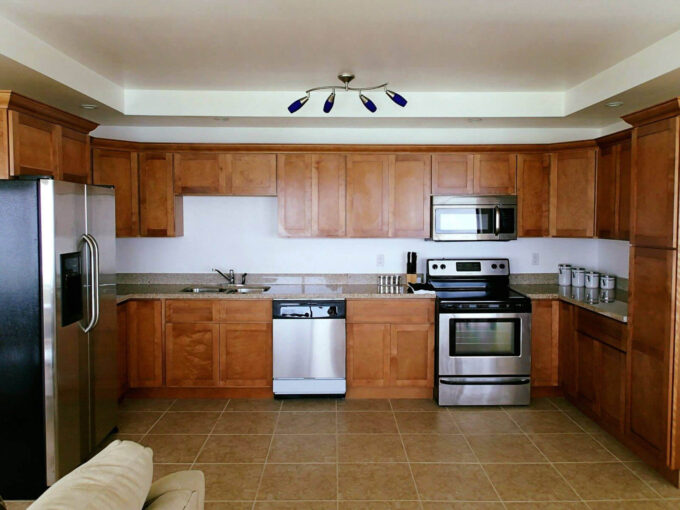
Foreclosed property in St. Kitts and Nevis is sold by the lending banks at public auction rather than listed on the open market. Here is how those auctions work, where they are held, and what to check before you bid.
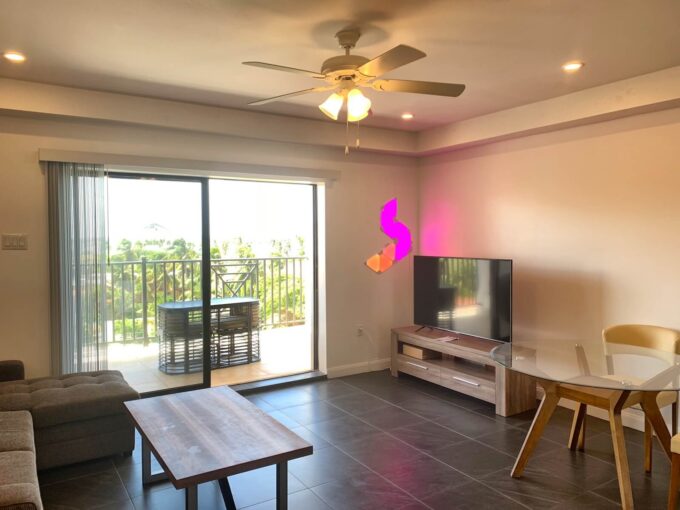
USD $1,100 / Monthly
USD $2,400 / Monthly
A foreclosure here is not a discounted listing sitting on an agent’s books. When a borrower defaults, the lending bank exercises its power of sale and disposes of the security at a public auction, advertised in advance with a venue, a date and a reserve. The property is sold as it stands, to the highest bidder above that reserve.
That one difference changes how you have to buy. There is no negotiation, no subject-to-financing clause and usually no view of the interior. You are bidding in a room, against other buyers, on a property you have mostly assessed from the outside, and the bank is under no obligation to sell if the bidding falls short.
Every auction notice publishes an upset price. That is the reserve: the lowest figure the property may be sold for on the day. Bidding can open beneath it, but the property cannot be knocked down for less. If no bid reaches the upset price the property is withdrawn, and it is normally re-advertised at a later sitting, sometimes at a reduced figure.
Read that number carefully, because it is set to recover what is owed – principal, accrued interest and costs – and not to reflect market value. On modest residential lots the two are often close. On commercial holdings and larger properties, where a debt has compounded for years, the upset price can sit well above anything the property would fetch in an ordinary sale. It is the bank’s number, not a valuation.
Sales are conducted at fixed venues rather than at the property itself:
Dates are published with the notice, but a great many listings carry a date of “TBA” until the bank schedules a sitting. If you are tracking a particular lot, check the notice again close to the date. Postponement and re-advertisement are both common, and a published schedule can sit unchanged for months.
Foreclosure stock comes from the lenders themselves, and no single national registry collects it. Two institutions publish current schedules on their own websites:
Other lenders, among them the Development Bank of St. Kitts and Nevis and FirstCaribbean International Bank, also recover and sell security, but through advertised notices rather than a standing web page. Notices additionally run in the local press and through the auctioneers handling each sale. Buying this way means watching several sources at once.
This catches out more overseas buyers than anything else on this page. Local bank notices are normally quoted in Eastern Caribbean dollars, while prices on this site and on most international portals are quoted in US dollars. The EC dollar is pegged to the US dollar at EC$2.70 to US$1.00.
An upset price written as $430,000 is therefore about US$159,000 if the notice is in EC dollars, and nearly three times that if it is not. Establish which currency a notice uses before you decide whether it represents value, and before you move any money.
At auction the diligence has to happen beforehand, because afterwards you own the problem. At minimum:
Non-nationals acquiring land in St. Kitts and Nevis generally require an Alien Landholding Licence, which takes time to obtain and carries a fee. That timeline has to be reconciled with the completion deadline in the auction notice before you bid, so take legal advice on the sequence early rather than after the hammer falls. Purchases made through the Citizenship by Investment programme run on a different track and are confined to approved developments, which is a separate matter from a bank auction.
Sometimes, and never automatically. The genuine value at Federation auctions tends to sit in bare land and modest residential lots, where the outstanding debt is small against the plot. Larger and commercial properties often carry upset prices anchored to years of accrued interest, and those can be poor buying.
Against any discount, set the costs an ordinary purchase does not carry: a title search you commission yourself, repairs to a building you could not inspect, possible proceedings to recover possession, and the licence if you are not a citizen. A foreclosure is a good purchase when you have priced all of that and the number still works.
Auction supply is unpredictable and the timing belongs to the bank, not to you. If you are working to a deadline it is worth running an open-market search alongside. Frigate Bay is where most enquiries concentrate, and our guide to buying property in Frigate Bay sets out what is there and how pricing works. Two of the properties on the National Bank’s current schedule sit in Frigate Bay Estate themselves.
We can also act for you at auction: search the title, assess the property, and bid on your instruction. If there is a notice you are already looking at, send us the lot details and we will tell you what we make of it.
Yes. The lending banks publish schedules of repossessed property and sell it at public auction rather than through open-market listings. St. Kitts-Nevis-Anguilla National Bank maintains the largest published list, covering houses, bare land and commercial buildings on both St. Kitts and Nevis.
The reserve on an auctioned property: the lowest price it may be sold for on the day. If no bid reaches it, the property is withdrawn and usually re-advertised later, sometimes at a reduced figure. An upset price is calculated to recover the outstanding debt, interest and costs, so it is not the same thing as a market valuation.
At fixed venues, not at the property. Auctions on St. Kitts are held at the Charles Amory Building, Fortlands, Basseterre. Auctions on Nevis are held at the Theodore Hobson Q.C. Court Building, at Prince William Street and Main Street in Charlestown.
Local bank notices are normally quoted in Eastern Caribbean dollars, while this site and most international portals quote US dollars. The EC dollar is pegged at EC$2.70 to US$1.00, so an upset price of $430,000 in EC dollars is about US$159,000. Always confirm the currency on the notice before budgeting, because the difference is nearly threefold.
Generally yes, but non-nationals usually require an Alien Landholding Licence to hold land, which takes time and carries a fee. Because an auction sets a fixed completion deadline, take legal advice on the licence before you bid rather than after.
Usually not inside. Properties are sold as they stand and are often still occupied. Inspect what you can from the boundary, and price in the repairs you cannot see. A property that has stood empty commonly needs work to the roof, wiring and plumbing.
You need your funds arranged in advance. A deposit is normally due immediately on the fall of the hammer, with the balance payable inside a fixed period set by the notice. There is no financing contingency at auction, so any mortgage has to be approved before you bid.
The property does not sell that day. It is withdrawn and normally re-advertised at a later sitting, sometimes with a reduced upset price. Schedules can carry the same lot for months, so a property appearing repeatedly is not unusual.
Not automatically. Bare land and smaller residential lots can be genuinely good value. Larger and commercial properties often carry upset prices anchored to years of accrued debt and can exceed market value. Price the title search, the repairs, any possession proceedings and the licence before deciding.
Watch the banks’ own property pages, the local press and the auctioneers’ notices. There is no single national registry, so several sources have to be checked and dates move. Send us a lot you are interested in and we will look at it with you.
If your question is not answered here, get in touch. We would rather check a detail for you than have you bid with an open question.
Owning a home is a keystone of wealth… both financial affluence and emotional security.
Suze OrmanPlease enter the 6-digit OTP sent to your email.
Time remaining: 05:00